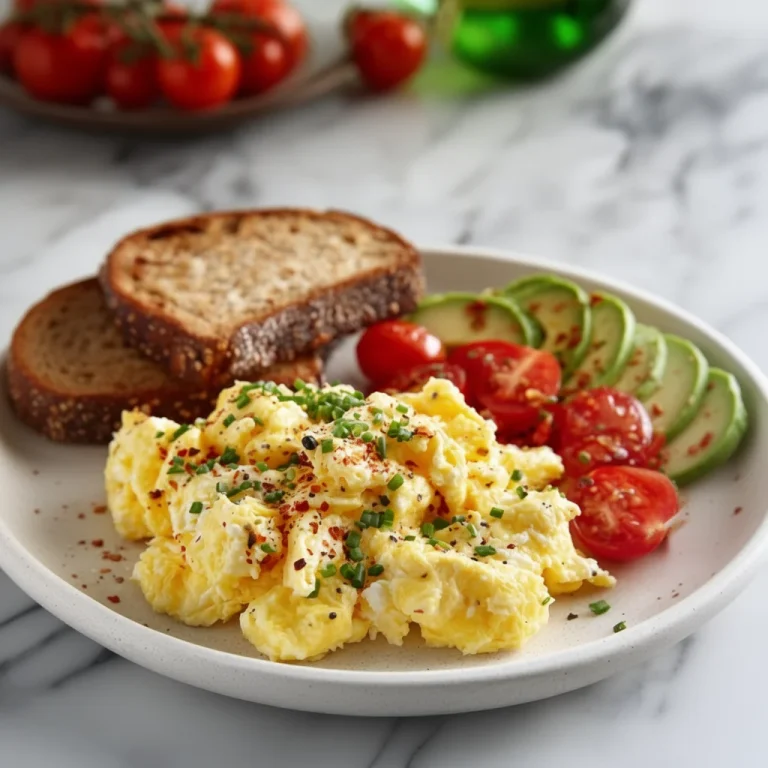
High Protein Scrambled Eggs with Cottage Cheese
I still remember the first time I blended cottage cheese into scrambled eggs — the result was unexpectedly silky, extra filling, and perfect for busy mornings when I wanted real protein without fuss. This simple recipe mixes four large eggs with half a cup of cottage cheese for a creamy, high-protein scramble that cooks in about 7 minutes. It’s great for post-workout breakfasts, quick weeknight dinners, or anyone trying to boost satiety without adding complicated ingredients.
Why you’ll love this dish
This scramble punches above its weight: eggs provide complete protein and essential amino acids, while cottage cheese adds extra protein and a tangy creaminess that keeps the eggs moist. It’s quick, budget-friendly, and flexible — a recipe that works for fitness-minded eaters, busy parents, and anyone who dislikes dry eggs.
- Ready in under 10 minutes.
- High in protein to keep you full through the morning.
- Uses pantry staples you probably already have.
- Kid-friendly texture and easy to customize.
“The cottage cheese makes the eggs unbelievably creamy and satisfying — my go-to post-workout breakfast now.” — a small, honest review from a regular cook
How this recipe comes together
A quick overview so you know what to expect before you start:
- Whisk eggs with cottage cheese, salt, and pepper until fairly smooth.
- Heat oil or butter in a non-stick skillet over medium heat.
- Pour the mixture into the pan and cook slowly, folding gently.
- Remove while slightly soft so residual heat finishes them — creamy, not rubbery.
- Plate and finish with fresh herbs if you like.
This is a low-heat, low-agitation method. The cottage cheese both thins the eggs slightly and adds curds that melt into a creamy texture as they cook.
What you’ll need
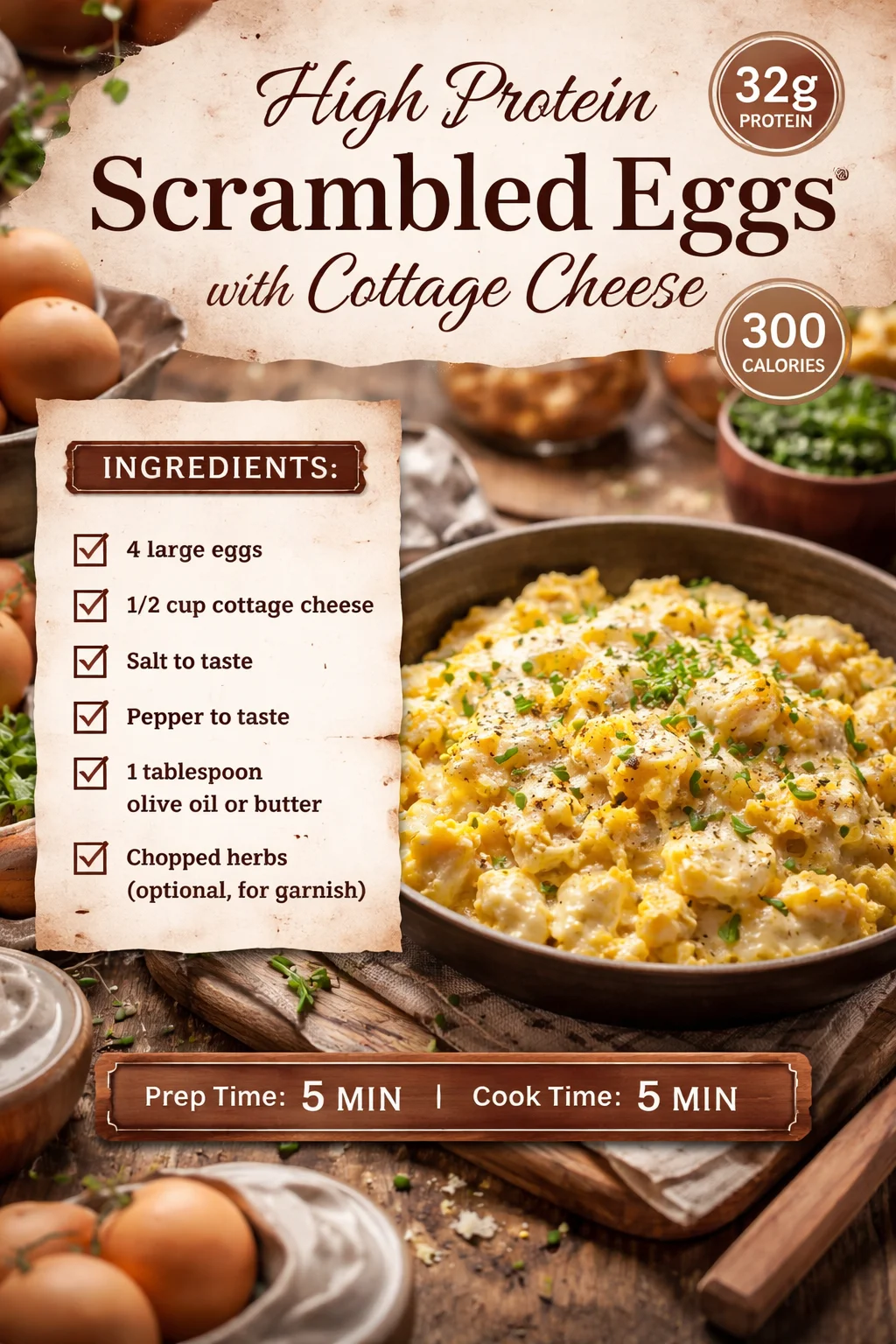
- 4 large eggs
- 1/2 cup cottage cheese (use small- or large-curd; full-fat gives the creamiest result)
- Salt, to taste
- Pepper, to taste
- 1 tablespoon olive oil or butter (butter gives richer flavor)
- Chopped herbs (optional, for garnish — chives, parsley, or dill work well)
Notes and substitutions:
- Short on cottage cheese? Substitute plain Greek yogurt or ricotta (similar texture but different tang).
- Want more protein with fewer yolks? Replace 1–2 whole eggs with extra egg whites.
- For dairy-free options, try blended silken tofu, but expect a different texture.
Directions to follow
- Crack the eggs into a mixing bowl. Add the cottage cheese, a pinch of salt, and a few grinds of black pepper. Whisk until combined but not perfectly smooth — a few curds are fine.
- Heat a non-stick skillet over medium. Add the olive oil or butter and let it warm until it shimmers (or the butter foams).
- Pour the egg-cottage cheese mixture into the skillet. Let it sit undisturbed for 10–15 seconds to begin setting at the edges.
- Using a heatproof spatula, gently push the eggs from the edges toward the center, folding rather than stirring aggressively. Repeat every 10–15 seconds. Cook on medium to medium-low so the curds form slowly.
- When the eggs are mostly set but still glossy and slightly runny, remove the pan from heat — carryover cooking will finish them. Serve immediately, topped with chopped herbs if desired.
Cook’s tip: low and slow is your friend here. High heat makes eggs dry fast; patience yields creamy curds.
Best ways to enjoy it
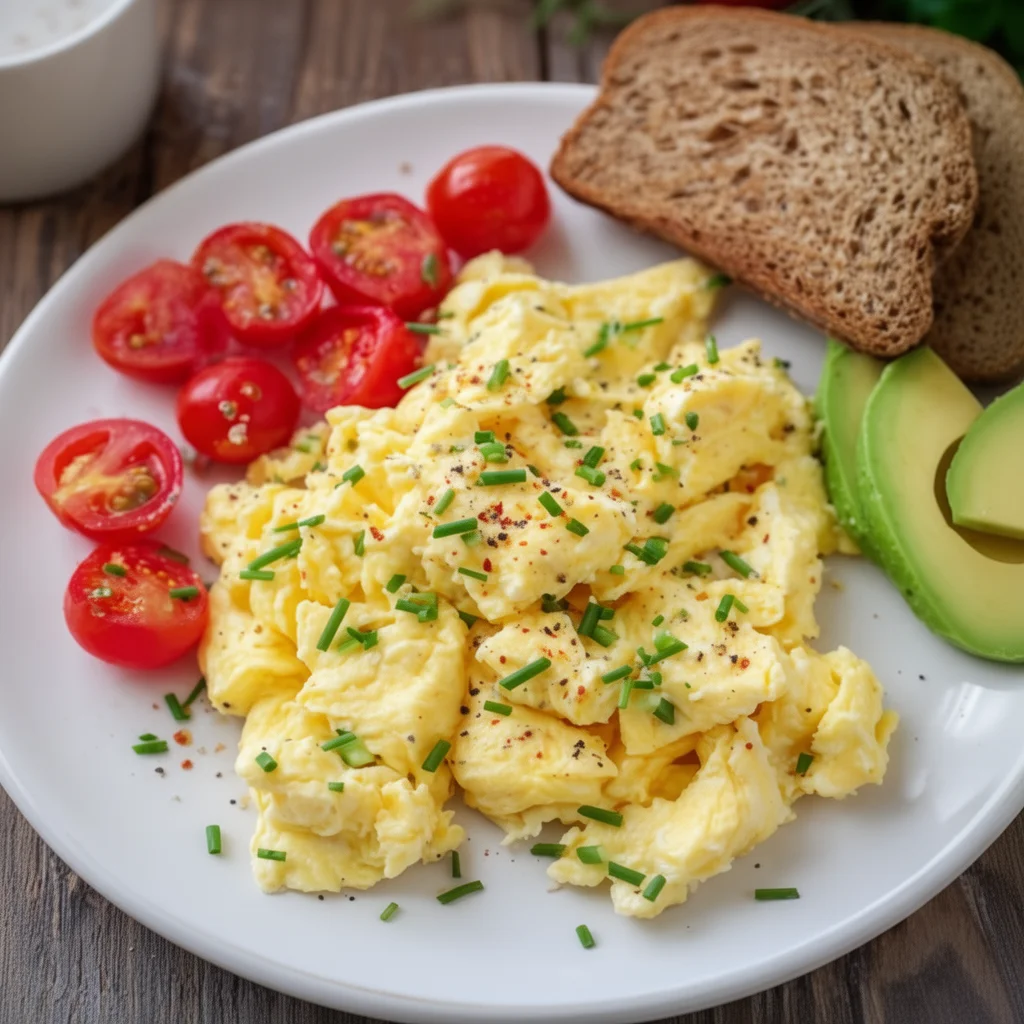
- Spoon over toasted whole-grain bread or an English muffin for an open-faced sandwich.
- Serve alongside steamed asparagus, sautéed spinach, or roasted cherry tomatoes for a balanced plate.
- Add smoked salmon, sliced avocado, or a sprinkle of chili flakes for extra flavor and texture.
- For a protein-packed bowl, layer the eggs over cooked quinoa with greens and a drizzle of olive oil.
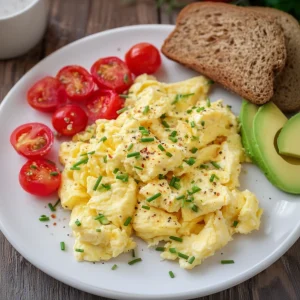
Presentation idea: pile the scramble in the center of a warmed plate, add a few herb sprigs, and finish with cracked pepper and a small drizzle of olive oil.
Storage and reheating tips
- Cool leftovers quickly and refrigerate in an airtight container within two hours of cooking.
- Store up to 3–4 days in the fridge. Reheat gently in a skillet over low heat with a splash of water or milk to restore creaminess, or microwave in 20–30 second bursts, stirring between each.
- Freezing cooked scrambled eggs is not ideal — they become watery and crumbly. If you must, freeze only once and expect a change in texture; thaw in the fridge and reheat gently.
- Always discard if eggs have been left at room temperature for more than two hours.
Food safety note: because this recipe contains dairy and eggs, keep it chilled and reheat to at least warm throughout before eating.
Pro chef tips
- Drain excess whey if your cottage cheese is very wet; too much liquid can make the eggs runny.
- For the creamiest outcome, use medium-low heat and remove the pan just before the eggs look fully done. They’ll finish without overcooking.
- Use a silicone or flexible spatula to fold gently and keep curds tender.
- Season at multiple points: a little salt in the whisked mixture and a finishing pinch at the end brightens the flavor.
- If you like very small curds, blend the cottage cheese briefly with the eggs before cooking.
Creative twists
- Mediterranean: fold in chopped sun-dried tomatoes, feta, and basil.
- Southwest: add diced roasted peppers, a pinch of cumin, and top with salsa and cilantro.
- Protein boost: stir in a scoop of plain whey powder or add extra egg whites.
- Veg-forward: sauté mushrooms and spinach first, then add the egg mixture for a one-skillet meal.
- Brunch upgrade: top with smoked trout or lox and capers for a luxurious finish.
Your questions answered
Q: How much protein is in this dish?
A: Roughly speaking, 4 large eggs provide about 24 grams of protein and 1/2 cup of cottage cheese adds roughly 12–15 grams, so you’re in the neighborhood of 36–40 grams total depending on the cottage cheese brand and fat content.
Q: Can I make this ahead for meal prep?
A: Yes — cook and cool quickly, store in an airtight container for up to 3–4 days, and reheat gently. Texture won’t be quite as fresh as right off the stove, but it’s still convenient and high in protein.
Q: Will the cottage cheese curds be noticeable?
A: That depends on the curd size and how much you whisk. Small-curd cottage cheese blends into a creamier texture; large-curd gives little pockets of tang. Both are delicious — choose based on your texture preference.
Q: Can I use fat-free cottage cheese?
A: Yes, but fat-free versions can be drier and less creamy. If using fat-free, consider adding a teaspoon of butter or a splash of milk to improve mouthfeel.
Q: Is this recipe suitable for weight loss diets?
A: It can be. High-protein breakfasts help with satiety and muscle maintenance. Portion control and the rest of your daily calorie balance matter, so pair the scramble with vegetables or whole grains for fullness without excessive calories.
Conclusion
This high-protein scrambled eggs recipe is a fast, reliable way to boost breakfast (or brunch) with extra protein and creaminess. If you want to compare variations or see other cooks’ takes, check out these resources: High-Protein Scrambled Eggs with Cottage Cheese – Skinnytaste and High-Protein Scrambled Eggs with Cottage Cheese – Joy Bauer.
High-Protein Scrambled Eggs
Ingredients
Egg Mixture
- 4 large large eggs Use fresh eggs for the best taste.
- 1/2 cup cottage cheese Small- or large-curd; full-fat gives the creamiest result.
- to taste salt Use according to preference.
- to taste pepper Use freshly ground for best flavor.
Cooking Fat
- 1 tablespoon olive oil or butter Butter gives a richer flavor.
Optional Garnish
- to taste chopped herbs Chives, parsley, or dill work well.
Instructions
Preparation
- Crack the eggs into a mixing bowl. Add the cottage cheese, a pinch of salt, and a few grinds of black pepper. Whisk until combined but not perfectly smooth — a few curds are fine.
Cooking
- Heat a non-stick skillet over medium. Add the olive oil or butter and let it warm until it shimmers (or the butter foams).
- Pour the egg-cottage cheese mixture into the skillet. Let it sit undisturbed for 10–15 seconds to begin setting at the edges.
- Using a heatproof spatula, gently push the eggs from the edges toward the center, folding rather than stirring aggressively. Repeat every 10–15 seconds. Cook on medium to medium-low so the curds form slowly.
- When the eggs are mostly set but still glossy and slightly runny, remove the pan from heat — carryover cooking will finish them. Serve immediately, topped with chopped herbs if desired.