Healthy Pineapple Chicken Stir-Fry
I first made this pineapple chicken stir-fry on a rainy weeknight when I needed something bright, fast, and healthy. The sweetness of fresh pineapple balances the savory soy-ginger notes, and the whole meal comes together in about 20 minutes — perfect for busy evenings or when you want a lighter takeout-style dinner at home.
Why you’ll love this dish
This stir-fry is a weeknight hero: lean protein, plenty of vegetables, and fresh fruit for natural sweetness. It’s quick to make, easy on the wallet, and adaptable for kids or picky eaters. The contrast of tender chicken, crisp-tender veggies, and juicy pineapple keeps every bite interesting without heavy sauces or frying.
“A perfect weeknight swap for takeout — bright, balanced, and ready in under 30 minutes.”
Reasons this recipe shines:
- Fast: Most of the work is chopping; cooking happens quickly over medium-high heat.
- Balanced: Protein, fiber-rich veggies, and fruit in one pan.
- Flexible: Swap vegetables, make it gluten-free, or add heat to taste.
- Kid-friendly: The sweet pineapple and mild sauce are usually a hit with kids.
How this recipe comes together
Overview before you start: cut the chicken into cubes, prep the vegetables and pineapple, then cook in a single large pan. Brown the chicken, add aromatics (garlic + ginger) to build flavor, then toss in vegetables and pineapple and stir-fry until everything is tender-crisp. Finish by stirring in soy sauce and seasoning.
Rough timeline:
- 5–7 minutes: brown chicken
- 1 minute: sauté garlic and ginger
- 5–7 minutes: stir-fry vegetables + pineapple
- 1–2 minutes: finish with soy sauce and seasonings
What you’ll need
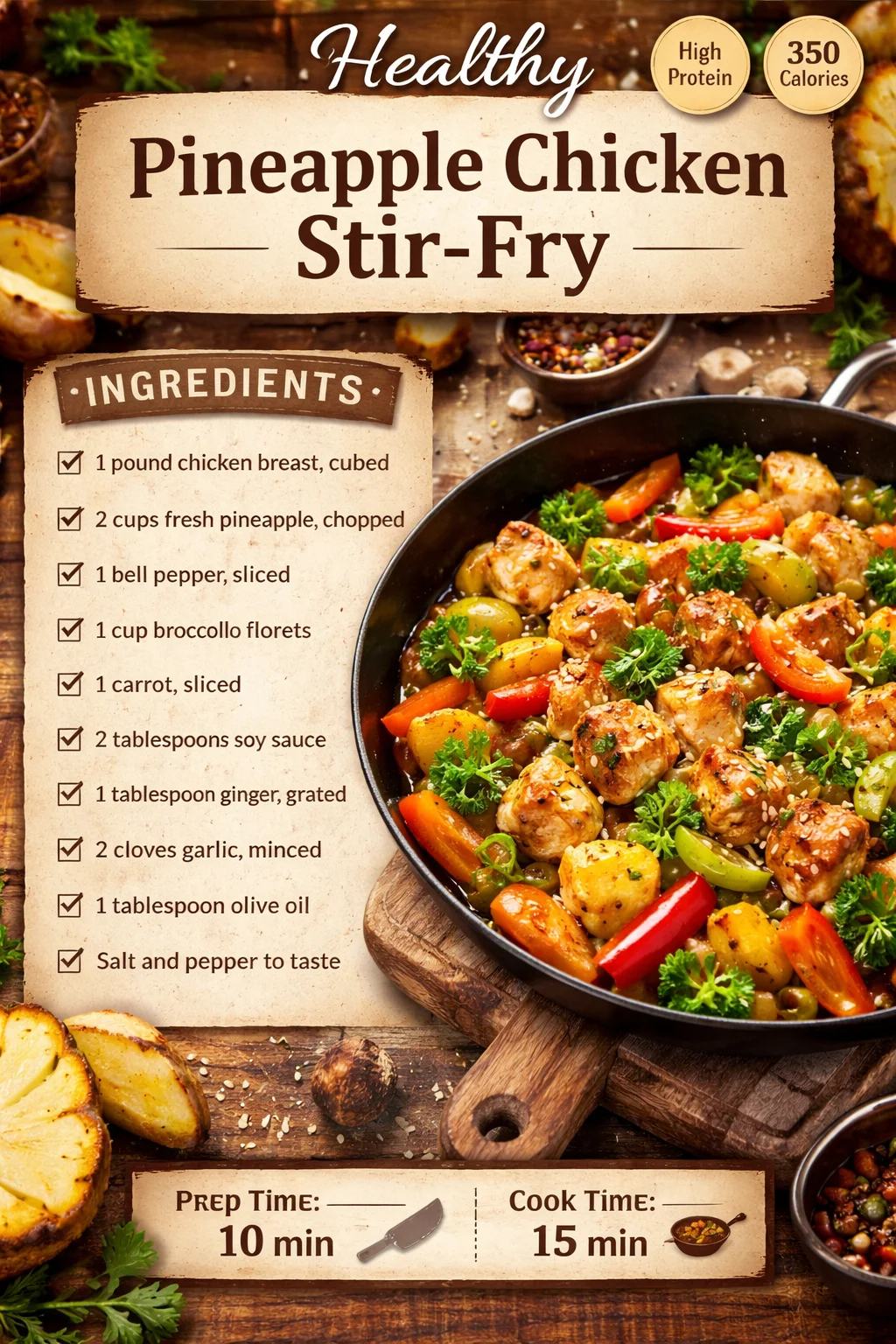
- 1 pound chicken breast, cubed (cut into even 1-inch pieces for even cooking)
- 2 cups fresh pineapple, chopped (canned works too—see notes)
- 1 bell pepper, sliced (any color)
- 1 cup broccoli florets
- 1 carrot, sliced thinly (or julienned)
- 2 tablespoons soy sauce (use low-sodium if preferred)
- 1 tablespoon ginger, grated (about 1 Tbsp fresh)
- 2 cloves garlic, minced
- 1 tablespoon olive oil (or neutral oil with higher smoke point like avocado if using higher heat)
- Salt and pepper to taste
Substitution notes:
- For gluten-free: replace soy sauce with tamari or coconut aminos.
- To make it vegetarian: swap chicken for firm tofu or tempeh (press tofu to remove moisture).
- If you want a glossy, thicker sauce, add 1 teaspoon cornstarch mixed with 1 tablespoon water at the end.
Step-by-step instructions
- Heat a large pan or wok over medium heat. Add 1 tablespoon olive oil.
- Add the cubed chicken in a single layer. Cook, stirring occasionally, until browned and cooked through, about 5–7 minutes. Transfer to the side if your pan is crowded.
- Add garlic and grated ginger to the pan and sauté for about 1 minute, until fragrant. Be careful not to burn the garlic.
- Add bell pepper, broccoli, and sliced carrot. Stir-fry 3–4 minutes until they begin to soften but remain crisp-tender.
- Add the chopped pineapple and continue to stir-fry 2–3 more minutes. The pineapple should warm and release some juice but not become mushy.
- Return the chicken to the pan, pour in 2 tablespoons soy sauce, and toss everything to combine. Taste and season with salt and pepper.
- Serve hot.
Best ways to enjoy it
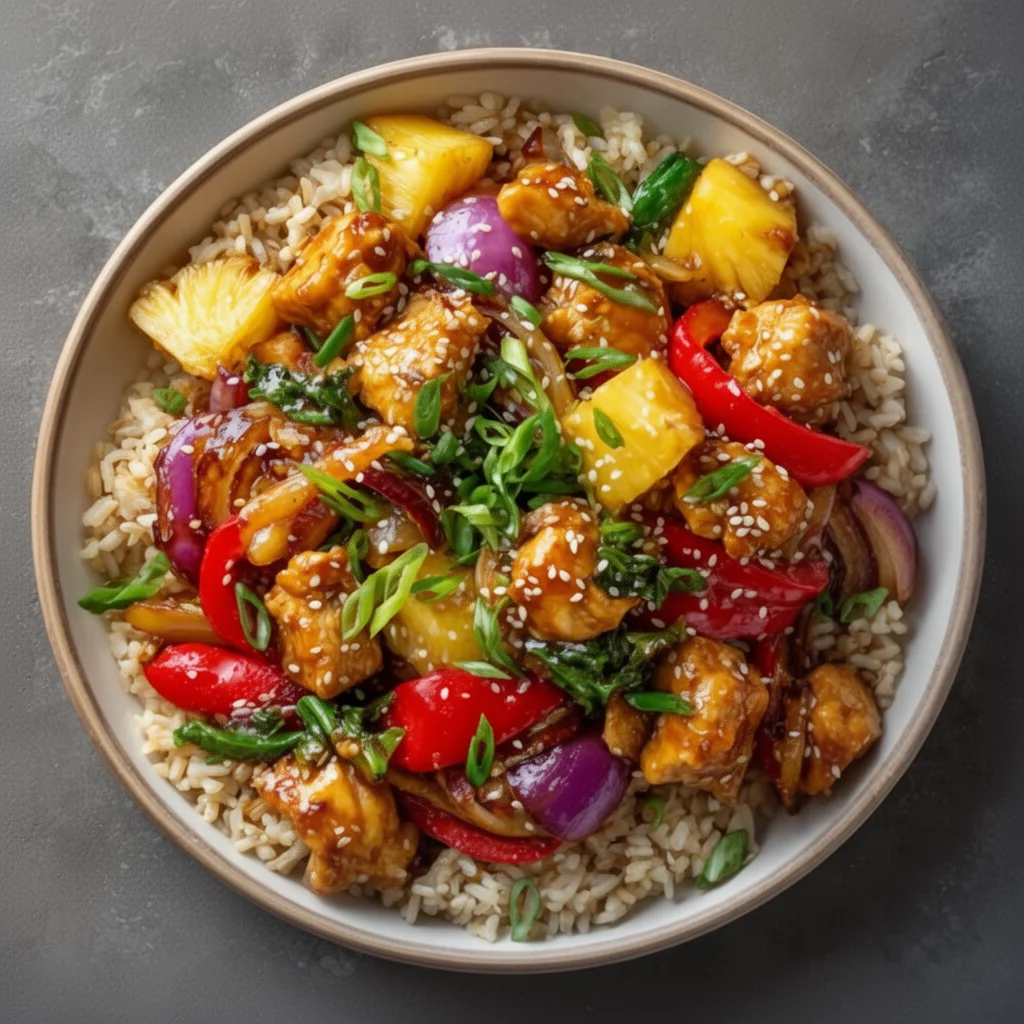
- Serve over steamed jasmine or brown rice for an easy bowl.
- Try it on a bed of cauliflower rice for a low-carb option.
- Toss with cooked udon or rice noodles and a splash of sesame oil for noodle bowls.
- Garnish with sliced scallions, toasted sesame seeds, or a handful of chopped cashews for crunch.
- Pair with a simple side salad or steamed greens to round out the meal.
Storage and reheating tips
- Refrigerator: Cool to room temperature within 2 hours, then store in an airtight container for up to 3–4 days.
- Freezer: Freeze portions in freezer-safe containers for up to 3 months. Thaw overnight in the fridge before reheating.
- Reheating: Reheat gently on the stovetop over medium heat, adding a splash of water or broth to loosen the sauce. Microwave in 30–45 second intervals, stirring between, until heated through.
- Food safety: Make sure chicken reaches an internal temperature of 165°F (74°C) when first cooking. Don’t leave cooked chicken at room temperature for more than two hours.
Pro chef tips
- Uniform pieces: Cut chicken and vegetables into uniform sizes so everything cooks evenly.
- High heat, quick stir: Use medium-high heat and keep things moving in the pan to get good color without overcooking.
- Dry the chicken: Pat chicken dry before cooking to encourage browning.
- Use fresh pineapple when you can: It adds the best texture and flavor; canned pineapple tends to be sweeter and softer.
- Don’t overcrowd the pan: If needed, cook chicken in batches so it browns rather than steams.
- Build flavor: Sauté garlic and ginger after browning the chicken but before adding the veggies — this layers the flavor.
Flavor swaps
- Spicy: Add 1 teaspoon red pepper flakes or 1–2 tablespoons sriracha to the sauce.
- Citrus twist: Stir in 1 tablespoon fresh lime juice at the end for brightness.
- Nutty: Finish with 2 tablespoons of peanut butter whisked into the soy sauce for a creamy, Thai-inspired variation.
- Tropical swap: Add mango instead of pineapple for a different sweet note.
- Protein changes: Use shrimp (cook 2–3 minutes) or sliced pork tenderloin (cook similar to chicken) in place of chicken.
- Sauce variations: For a sticky glaze, mix 1 tablespoon honey or maple syrup into the soy sauce before adding.
Common questions
Q: How long does this take to make?
A: Active cooking time is about 15–20 minutes after chopping. Plan 10–15 minutes for prep, so total time is roughly 25–35 minutes.
Q: Can I use frozen pineapple or canned pineapple?
A: Yes. Frozen pineapple works fine — thaw and drain excess liquid first. Canned pineapple is sweeter and softer; drain well and reduce any added sweeteners in the sauce.
Q: Can I prep this ahead?
A: You can chop vegetables and pineapple a day ahead and store them in airtight containers. For best texture, cook just before serving. Do not marinate chicken with pineapple for too long—pineapple contains enzymes that can break down the meat and make it mushy.
Q: How to make it gluten-free or lower sodium?
A: Use tamari or coconut aminos instead of regular soy sauce. Opt for low-sodium soy sauce and taste before adding salt.
Q: My sauce is watery — how do I thicken it?
A: Whisk 1 teaspoon cornstarch with 1 tablespoon cold water and stir into the pan during the final minute. Heat until the sauce thickens.
Conclusion
For another home-cooked take on this classic, see Healthy Pineapple Chicken Stir Fry – Erin Lives Whole for a slightly different healthy approach. If you want more technique notes and variations, check out Pineapple Chicken Stir-Fry – Jessica Gavin for inspiration and plating ideas.
Pineapple Chicken Stir-Fry
Ingredients
Protein
- 1 pound chicken breast, cubed Cut into even 1-inch pieces for even cooking.
Fruits
- 2 cups fresh pineapple, chopped Canned works too.
Vegetables
- 1 cup broccoli florets
- 1 each bell pepper, sliced Any color.
- 1 each carrot, sliced thinly Or julienned.
Aromatics
- 2 cloves garlic, minced
- 1 tablespoon ginger, grated About 1 Tbsp fresh.
Sauces & Oils
- 2 tablespoons soy sauce Use low-sodium if preferred.
- 1 tablespoon olive oil Or a neutral oil with a higher smoke point like avocado.
- Salt and pepper to taste
Instructions
Preparation
- Heat a large pan or wok over medium heat. Add 1 tablespoon olive oil.
- Add the cubed chicken in a single layer. Cook, stirring occasionally, until browned and cooked through, about 5–7 minutes.
- Transfer chicken to the side if your pan is crowded.
Cooking
- Add garlic and grated ginger to the pan and sauté for about 1 minute, until fragrant. Be careful not to burn the garlic.
- Add bell pepper, broccoli, and sliced carrot. Stir-fry for 3–4 minutes until they begin to soften but remain crisp-tender.
- Add the chopped pineapple and continue to stir-fry for 2–3 more minutes.
- Return the chicken to the pan, pour in 2 tablespoons soy sauce, and toss everything to combine.
- Taste and season with salt and pepper.
Serving
- Serve hot over steamed jasmine or brown rice, cauliflower rice, or toss with cooked udon or rice noodles.
- Garnish with sliced scallions, toasted sesame seeds, or a handful of chopped cashews.