Cottage Cheese Flatbread
I’ve made this cottage cheese flatbread more times than I can count when I needed something quick, protein-rich, and adaptable. It’s a simple skillet flatbread made from cottage cheese, oat flour, and eggs — think light, slightly tangy, and golden on the outside. It’s perfect for a fast breakfast, a protein-packed snack, or a quick base for open-faced sandwiches.
Why you’ll love this dish
This flatbread hits a sweet spot: it’s fast to make, uses pantry staples, and packs more protein than most quick breads thanks to the cottage cheese and eggs. Home cooks like it because it’s forgiving — the dough can be shaped by hand, and skillet cooking means no oven preheat. It’s also easy to customize for kids, meal-prep, or a gluten-free diet (use certified gluten-free oat flour).
“I swapped toast for these flatbreads for a week — breakfast felt lighter but kept me full until lunch.” — a happy weeknight convert
The recipe works for busy mornings, impromptu guests, or when you want a neutral flatbread to pair with hummus, eggs, or roasted vegetables.
Step-by-step overview
Before you start: you’ll mix cottage cheese, oat flour, eggs, baking powder, and salt into a soft dough. Then you pan-fry small rounds in a little olive oil until both sides are golden and slightly crisp. Total active time is roughly 10–15 minutes; a single batch yields several small flatbreads for immediate serving or storage.
Quick expectations:
- Prep: 5 minutes (mixing and dividing)
- Cook: 10–12 minutes total
- Skill level: beginner-friendly
- Equipment: mixing bowl, skillet, spatula
Gather these items
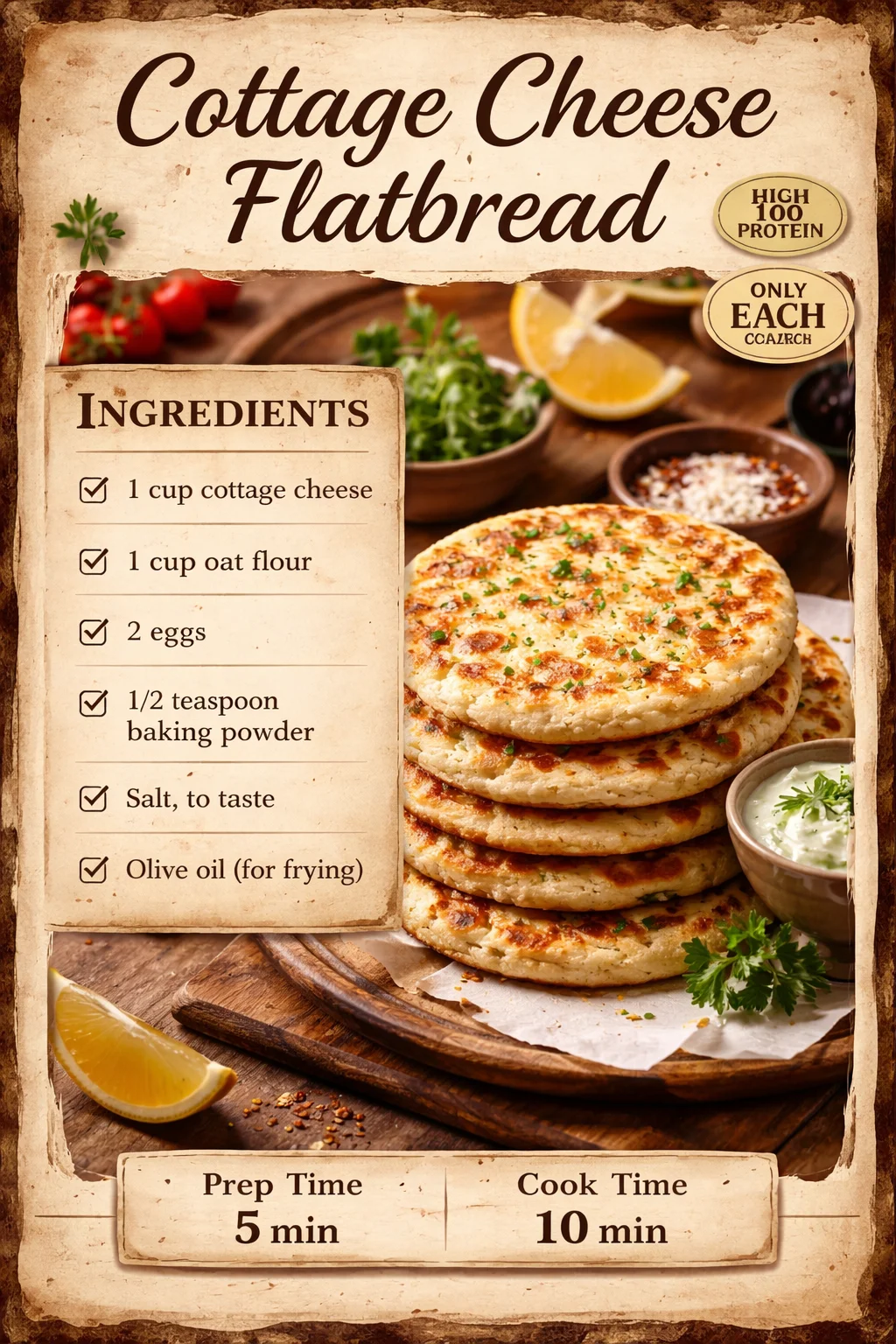
- 1 cup cottage cheese (use full-fat or low-fat as you prefer; cottage cheese should be drained if very watery)
- 1 cup oat flour (certified gluten-free if needed)
- 2 eggs
- 1/2 teaspoon baking powder
- Salt, to taste (start with 1/4–1/2 teaspoon)
- Olive oil (for frying)
Notes: If your cottage cheese is very lumpy, pulse it briefly in a blender for a smoother dough. For a denser flatbread, let the mixed dough rest 5–10 minutes so the oat flour hydrates.
Step-by-step instructions
- In a medium bowl, combine the cottage cheese, oat flour, eggs, baking powder, and a pinch of salt. Mix until a cohesive dough forms — it should be slightly sticky but workable. If it’s too loose, add a tablespoon of oat flour at a time.
- Heat a skillet over medium heat and add a little olive oil to coat the surface. A nonstick or well-seasoned skillet works best.
- Divide the dough into 6–8 equal portions (smaller for snack-size, larger for sandwich-size). Shape each portion into a ball, then flatten into rounds about 1/4–1/3 inch thick.
- Place the rounds in the preheated skillet and cook for about 3–4 minutes per side. You’re looking for golden-brown spots and slightly crisp edges. Flip gently with a spatula.
- Transfer cooked flatbreads to a wire rack or plate. Serve warm.
Pro tip: If the flatbreads brown too quickly before cooking through, lower the heat slightly and give them a little more time.
What to serve it with
These flatbreads are highly versatile:
- Breakfast: topped with scrambled eggs, smoked salmon, or avocado and a squeeze of lemon.
- Snack: spread with hummus or labneh and finished with chili oil or za’atar.
- Lunch/dinner: use as a base for open-faced sandwiches with roasted vegetables, chicken shawarma, or a drizzle of tahini.
- Kid-friendly: a little butter and jam or cream cheese and fruit slices.
Pair with a salad or soup for a light meal, or stack with protein and greens for a heartier sandwich.
How to store & freeze
Short-term storage:
- Cool flatbreads completely, then stack with parchment between layers and store in an airtight container in the refrigerator for up to 3–4 days.
Freezing:
- Freeze flatbreads in a single layer on a baking sheet until firm, then transfer to a freezer bag. They keep well for up to 1 month.
- Thaw at room temperature or reheat from frozen.
Reheating:
- For best texture, reheat in a dry skillet over medium-low for 1–2 minutes per side until warmed and slightly crisp.
- Microwaving is quicker but can make them softer; if you use the microwave, pop them into a hot skillet for 20–30 seconds afterward to restore some crispness.
Food safety: cool to room temperature before refrigerating, and don’t leave cooked items at room temperature for more than 2 hours.
Pro chef tips
- Texture balance: cottage cheese adds moisture; if your flatbreads are too wet, sprinkle in more oat flour a tablespoon at a time. If too dry, add a teaspoon of water or an extra tablespoon of cottage cheese.
- Smooth dough trick: blend cottage cheese briefly to reduce lumps — this helps bind the oat flour more evenly.
- Even cooking: press gently with a spatula while cooking to encourage even contact with the pan and consistent browning.
- Flavor boost: add 1 teaspoon minced fresh herbs or 1/2 teaspoon garlic powder to the dough for extra depth.
- Size control: for sandwiches, make 4 larger rounds; for snacks, divide into 8–10 smaller pieces and reduce cook time slightly.
Creative twists
- Savory herb: fold chopped rosemary, thyme, or dill into the dough.
- Cheesy: mix 1/4 cup grated Parmesan into the dough for a sharper flavor and crisper crust.
- Spiced: add 1/2 teaspoon smoked paprika or cumin for warmth.
- Vegan-ish swap: replace eggs with 2 tablespoons ground flaxseed mixed with 6 tablespoons water (let sit 5 minutes) — texture will be softer and less puffy.
- Grain swap: substitute almond flour for oat flour for a lower-carb version, but reduce quantity slightly because almond flour absorbs less liquid.

Your questions answered
Q: How long does it take to make these flatbreads?
A: Hands-on time is about 10–15 minutes total: 5 minutes to mix and shape, then roughly 8–12 minutes to cook the batch.
Q: Can I use regular flour instead of oat flour?
A: Yes. Use all-purpose flour in a 1:1 swap, but expect a slightly different texture — less oat flavor and possibly a crisper edge. For gluten-free, use certifed gluten-free oat flour.
Q: Are these high in protein?
A: Yes — cottage cheese and eggs contribute solid protein. Exact grams depend on the cottage cheese brand and portion size, but they’re a better protein option than many quick breads.
Q: Can I make the dough ahead?
A: You can mix the dough and refrigerate for up to 24 hours. The oat flour will absorb moisture and thicken the dough, so you may need to loosen it with a splash of water or an extra egg before shaping.
Q: Will the flatbreads get soggy if I top them?
A: Heavy, wet toppings (like saucy stews) can soften them. For best texture, add toppings just before serving or toast quickly after topping.
Conclusion
If you’d like another recipe variation or step-by-step photos, check this Cottage Cheese Flatbread Recipe – The Protein Chef for a similar approach and plating ideas. For nutrition-focused notes and a slightly different method, see this Cottage Cheese Flatbread Recipe (18 Grams of Protein).
Cottage Cheese Flatbread

Ingredients
Main ingredients
- 1 cup cottage cheese Use full-fat or low-fat; drain if very watery.
- 1 cup oat flour Use certified gluten-free if needed.
- 2 pieces eggs
- 1/2 teaspoon baking powder
- Salt to taste Salt, to taste (start with 1/4–1/2 teaspoon)
- for frying Olive oil For frying.
Instructions
Preparation
- In a medium bowl, combine the cottage cheese, oat flour, eggs, baking powder, and a pinch of salt. Mix until a cohesive dough forms — it should be slightly sticky but workable.
- If the dough is too loose, add a tablespoon of oat flour at a time.
Cooking
- Heat a skillet over medium heat and add a little olive oil to coat the surface.
- Divide the dough into 6-8 equal portions, shape each portion into a ball, then flatten into rounds about 1/4–1/3 inch thick.
- Place the rounds in the preheated skillet and cook for about 3–4 minutes per side until golden-brown spots and slightly crisp edges form.
- Transfer cooked flatbreads to a wire rack or plate. Serve warm.