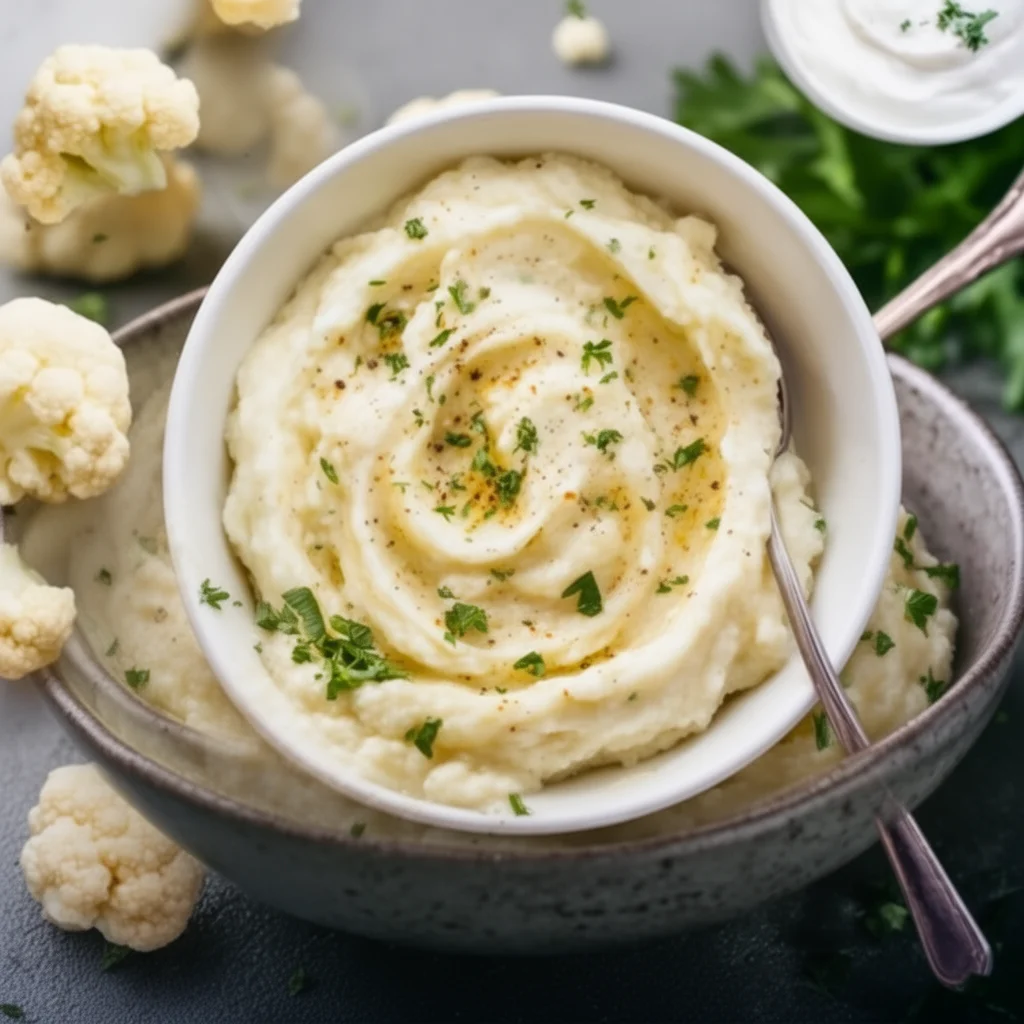
Creamy Mashed Cauliflower
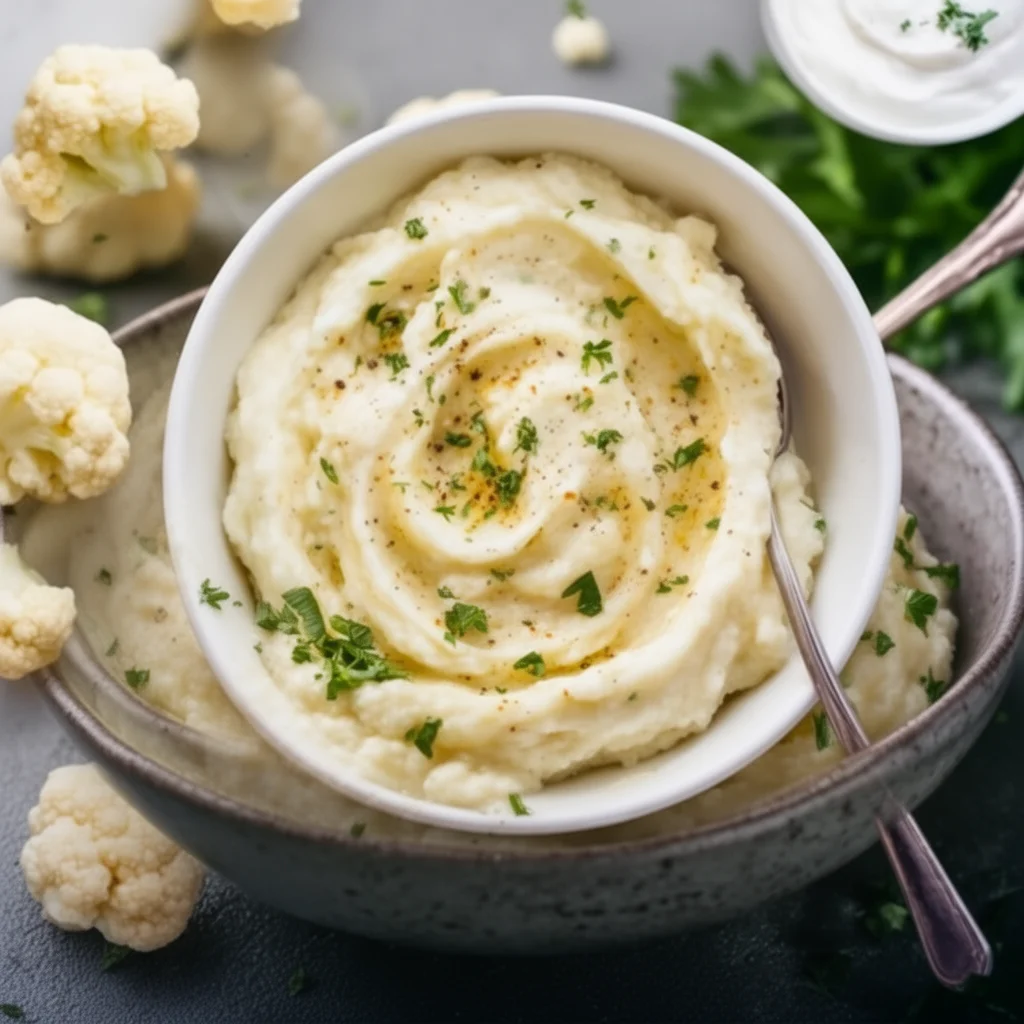
I make this creamy mashed cauliflower almost every week — it’s my go-to when I want the comfort of mashed potatoes without the heaviness. Velvety, quick, and forgiving, this mash brightens weeknight dinners, fits low-carb plans, and makes a great side for holiday plates when you want something lighter.
Why you’ll love this dish
This mashed cauliflower is creamy without being heavy. It delivers the familiar texture of mashed potatoes but with fewer carbs and fewer calories. It’s also fast: from chopping to plate in about 20–25 minutes if you steam the florets. Families tend to like it because the mild flavor accepts all sorts of seasonings and toppings, and it’s an easy dish to stretch into a main (think bowl with roasted veggies and protein).
“Silky and surprisingly satisfying — even my potato-loving partner prefers this on busy nights.”
Besides being tasty, it’s flexible (use butter or olive oil, cream or milk), budget-friendly (one head of cauliflower feeds 2–4 people), and a solid vehicle for herbs, cheese, or roasted garlic when you want to dress it up.
How this recipe comes together
Start by breaking a head of cauliflower into evenly sized florets so they cook uniformly. Cook them until a fork slides in easily — tender but not falling apart. Drain thoroughly to avoid a watery mash, then return the cauliflower to a warm bowl. Add butter or olive oil and a splash of cream or milk to achieve a silky texture. Mash by hand for a rustic result, or blend briefly for an ultra-smooth finish. Taste and adjust salt, pepper, and optional garlic powder, then finish with fresh chives or parsley for color.
Expect about 20–25 minutes total: 10–15 minutes hands-on (chopping and draining) and 8–12 minutes cooking time depending on method.
What you’ll need
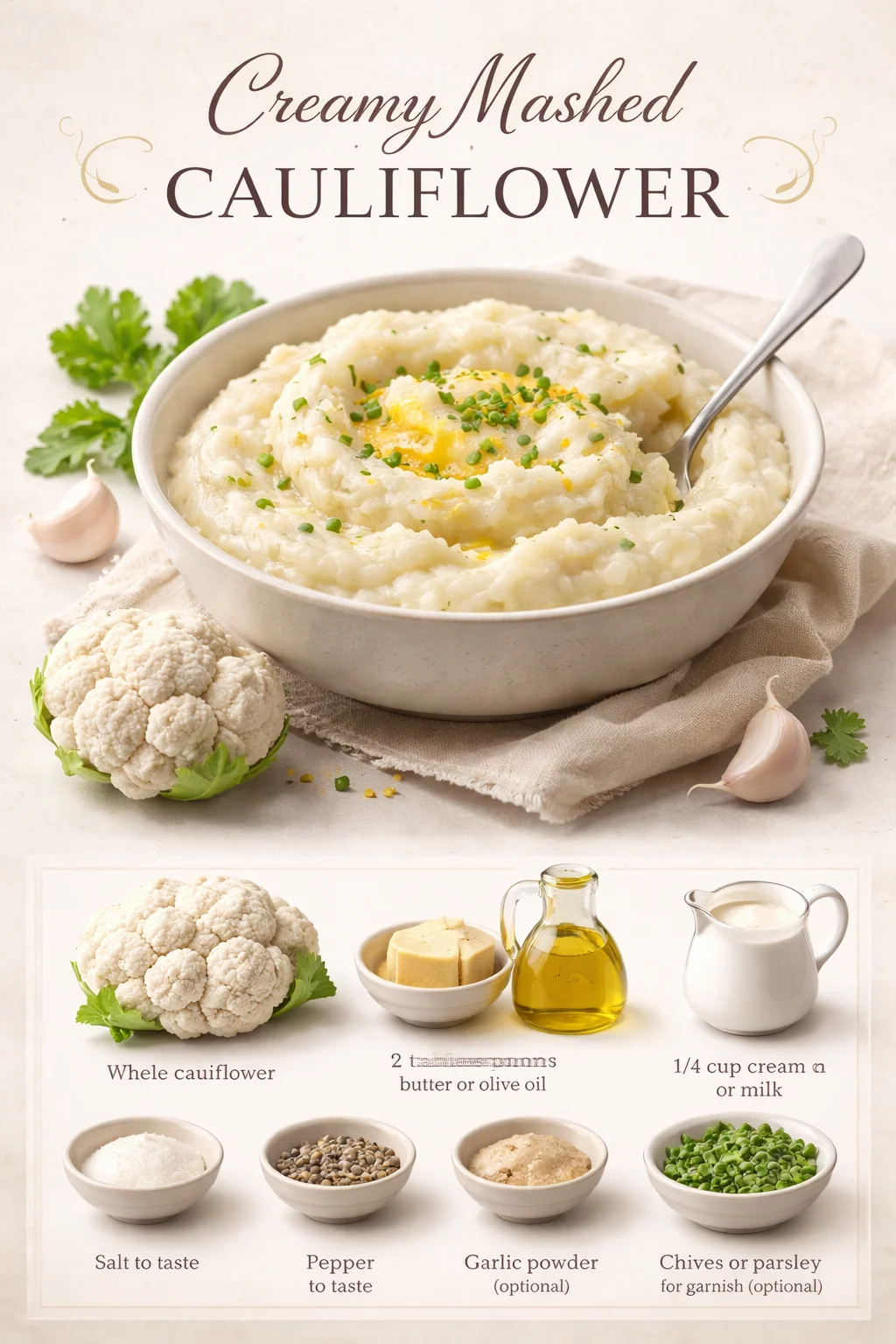
- 1 head of cauliflower, trimmed into florets
- 2 tablespoons butter or olive oil (butter for richness; olive oil for dairy-free)
- 1/4 cup cream or milk (use half-and-half or non-dairy milk for lighter/vegan)
- Salt to taste
- Pepper to taste
- Garlic powder (optional — start with 1/4 teaspoon)
- Chives or parsley for garnish (optional)
Notes: For a richer, more custardy mash, swap some cream for a tablespoon of cream cheese. If using frozen cauliflower, thaw and drain well before proceeding.
How to prepare it
- Cut the cauliflower into even-sized florets so they cook at the same rate.
- Steam or boil the florets until fork-tender, about 8–12 minutes. Steam for a more concentrated flavor; boiling is slightly faster.
- Drain thoroughly and transfer the cauliflower to a warm mixing bowl. If it’s very wet, let it sit in a fine-mesh sieve for a minute, or pat dry with a clean kitchen towel.
- Add the butter (or olive oil), cream (or milk), salt, pepper, and garlic powder. Start with a little salt; you can add more later.
- Mash with a potato masher for a textured mash, or pulse briefly in a blender/immersion blender for a very smooth result. Don’t over-blend — that can make cauliflower gummy.
- Taste and adjust seasoning. Serve hot, garnished with chopped chives or parsley if desired.
Best ways to enjoy it
- Serve under roasted chicken thighs or pan-seared salmon as a velvety side.
- Use as a lower-carb base for shepherd’s pie — spread in a baking dish, top with meat and vegetables, then bake.
- Top with sautéed mushrooms and a drizzle of browned butter for an elegant plate.
- For breakfast, spoon alongside fried eggs and crisp bacon.
- For family meals, offer shredded cheddar and crispy bacon bits for a “loaded” version.
Storage and reheating tips
- Refrigeration: Cool to room temperature, then store in an airtight container for up to 3–4 days.
- Freezing: Portion into freezer-safe containers and freeze for up to 3 months. Texture may change slightly; a little extra cream or butter when reheating restores creaminess.
- Reheating: Gently reheat on the stovetop over low heat, stirring and adding a splash of milk or cream as needed. Microwave in short bursts, stirring between intervals. Reheat until the mash reaches 165°F (74°C) for safety.
- Food safety: Do not leave cooked cauliflower at room temperature longer than two hours. Label containers with date before freezing.
Pro chef tips
- Steam rather than boil when possible. Steaming reduces water absorption and concentrates flavor.
- Drain extremely well. Excess water is the main culprit for thin, runny mash. After draining, spread florets on a clean towel and blot gently if needed.
- Avoid over-processing. A food processor can turn cauliflower gluey if run too long. Pulse sparingly or use an immersion blender with short bursts.
- Warm dairy blends better. Heat cream or milk slightly before adding to hot cauliflower so it emulsifies and gives a silkier finish.
- Season in layers. Add a little salt during mashing, then taste and correct at the end — cauliflower can handle more seasoning than you expect.
- Add texture: fold in a small handful of roasted, chopped cauliflower florets for contrast.
Creative twists
- Parmesan & white pepper: Stir in 2 tablespoons grated Parmesan and a pinch of white pepper for an Italian lift.
- Roasted cauliflower mash: Roast the florets until golden before mashing for a nuttier, deeper flavor.
- Garlic-forward: Roast a head of garlic and mash the softened cloves with the cauliflower.
- Vegan: Use olive oil and unsweetened almond or oat milk; add nutritional yeast for a cheesy note.
- Loaded: Mix in shredded cheddar, scallions, and crispy bacon for a decadent side.
- Herb & lemon: Fold in lemon zest and chopped parsley or dill for brightness.
- Spicy: Stir in a spoonful of harissa or sriracha for a warm, spicy edge.
Your questions answered
Q: How long does it take to cook cauliflower until fork-tender?
A: For florets, steaming usually takes 8–10 minutes. Boiling is about 7–12 minutes depending on floret size. Test with a fork — it should pierce easily without the pieces falling apart.
Q: Can I use frozen cauliflower?
A: Yes. Thaw completely and drain or squeeze out extra water before mashing. Frozen tends to release more moisture, so reduce added liquid accordingly.
Q: Why did my mashed cauliflower become stringy or gluey?
A: Over-blending is the usual cause. Use a potato masher or pulse briefly in a blender. Processors and long blending times break down fibers into a stringy texture.
Q: Is this suitable for a keto diet?
A: Yes. Cauliflower is low in carbs; use full-fat cream or cream cheese and butter to keep it keto-friendly.
Q: Can I make this ahead for a party?
A: Yes. Make the mash, cool, and store in the fridge. Reheat gently on the stovetop with a splash of cream and finish with fresh herbs just before serving.
Conclusion
If you want to explore variations and visual step-by-step photos, see the detailed take on creamy mashed cauliflower at RecipeTin Eats’ Creamy Mashed Cauliflower. For a keto-focused version with tips on texture and ingredient swaps, check out Wholesome Yum’s Mashed Cauliflower (Easy & Creamy).
Creamy Mashed Cauliflower

Ingredients
Main Ingredients
- 1 head head of cauliflower, trimmed into florets
- 2 tablespoons butter or olive oil butter for richness; olive oil for dairy-free
- 1/4 cup cream or milk use half-and-half or non-dairy milk for lighter/vegan
- to taste Salt
- to taste Pepper
- 1/4 teaspoon Garlic powder (optional) start with this amount
- for garnish Chives or parsley (optional)
Instructions
Preparation
- Cut the cauliflower into even-sized florets so they cook at the same rate.
- Steam or boil the florets until fork-tender, about 8–12 minutes. Steaming gives a more concentrated flavor; boiling is slightly faster.
- Drain thoroughly and transfer the cauliflower to a warm mixing bowl. If it’s very wet, let it sit in a fine-mesh sieve for a minute, or pat dry with a clean kitchen towel.
Mashing
- Add the butter (or olive oil), cream (or milk), salt, pepper, and garlic powder. Start with a little salt; you can add more later.
- Mash with a potato masher for a textured mash, or pulse briefly in a blender/immersion blender for a very smooth result. Don’t over-blend, as that can make cauliflower gummy.
- Taste and adjust seasoning. Serve hot, garnished with chopped chives or parsley if desired.